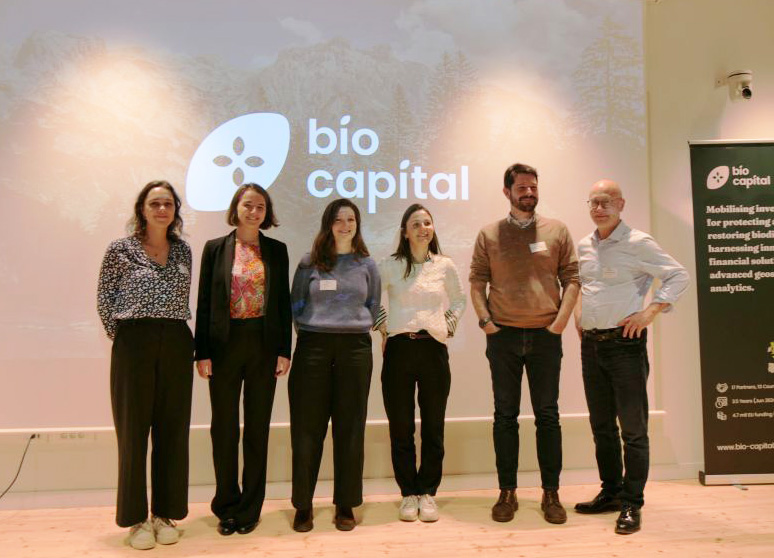
Biodiversity and Agriculture: What We Learned from the BIO-CAPITAL Technical Day in Toulouse
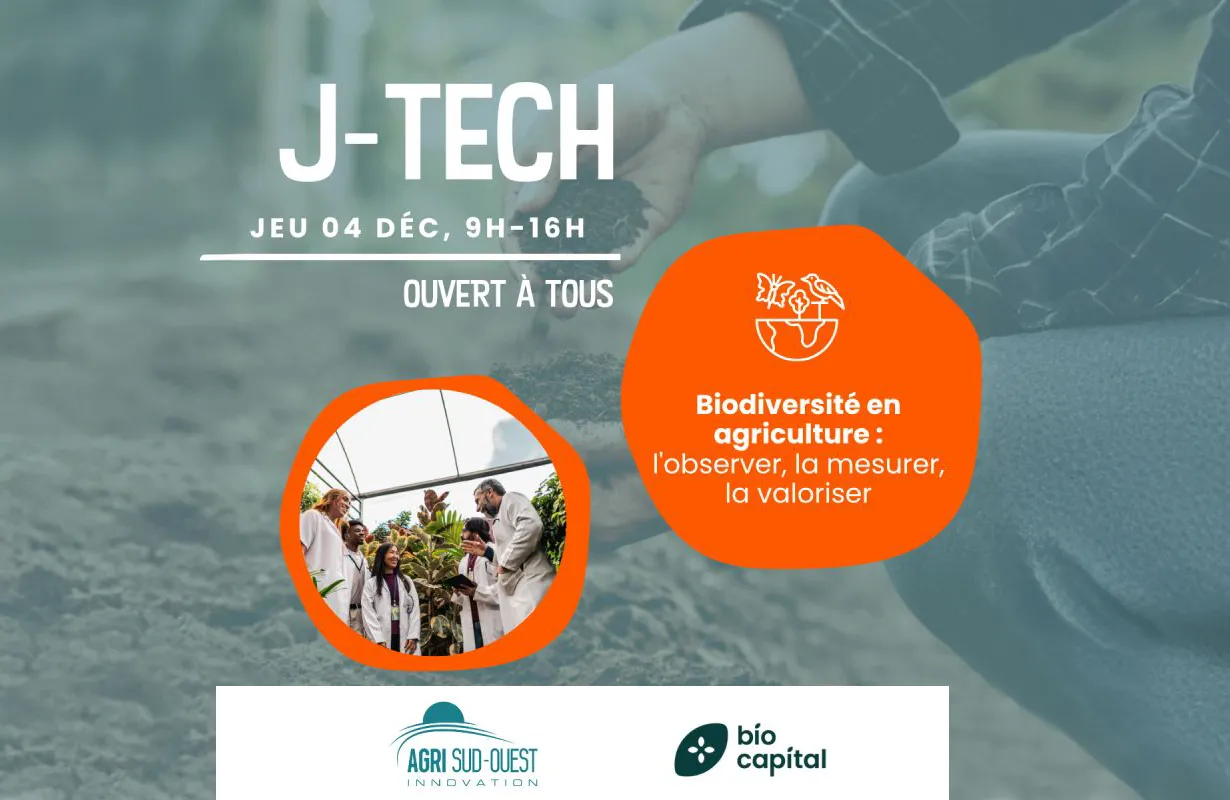
How can biodiversity be measured, valued and financed on farms — in ways that work for farmers, policymakers and investors alike? This question was at the heart of the BIO-CAPITAL Technical Day on Biodiversity in Agriculture, held in Toulouse and organised by Agri Sud-Ouest Innovation as part of the BIO-CAPITAL Horizon Europe project.
Agri Sud-Ouest Innovation, one of the French partners in our project, regularly hosts its J-TECH event series. The last event on 4 December was devoted in detail to the topics covered by BIO-CAPITAL. The event brought together regional authorities, researchers, Earth observation experts, financial actors and practitioners for a full day of presentations, discussions and exchanges — highlighting both what already works in biodiversity remuneration, and what is still missing to scale it.
Setting the scene: BIO-CAPITAL and its objectives
The day opened with an overview of the BIO-CAPITAL project, presented by Romane Bizieau (Agri Sud-Ouest Innovation). BIO-CAPITAL aims to mobilise both public and private funding for biodiversity conservation and restoration by combining innovative financial mechanisms with satellite-based monitoring. Participants were introduced to the project’s use cases, ongoing work on biodiversity indicators, and the broader ambition to design credible frameworks for biodiversity certificates that can complement existing public instruments.
The regional context was then outlined by Natacha Racinais and Bénédicte Goffre from the Regional Biodiversity Agency (ARB) Occitanie. Their presentation highlighted the ecological pressures facing agriculture in the region — from habitat fragmentation and pesticide use to pollinator decline — alongside the diversity of public instruments already in place.
Measuring biodiversity on farms: ecology meets Earth observation
A central part of the Technical Day focused on how biodiversity can be measured at farm scale in a way that is both scientifically sound and operational. From an ecological perspective, Jean-Louis Hemptinne (ENSFEA) reminded participants that biodiversity is not simply about counting species, but about genetic diversity and ecological interactions that sustain ecosystem functioning and resilience. He emphasised the importance of landscape structure as a practical proxy for biodiversity outcomes: the share and distribution of (semi-)natural habitats, field morphology, crop rotations and agroforestry.
This ecological framing was complemented by a technical deep dive into remote sensing and indicators, presented by Harold Clenet (EarthDaily Agro) and Lisa Delvaux (UCLouvain). They demonstrated how satellite data can be used to map hedgerows, ponds, mowing frequency, bare soil and crop diversity, and how time series allow changes in practices to be tracked over time. The key message was clear: scalable biodiversity finance depends on robust proxy indicators, combining satellite data, administrative datasets and targeted field verification — rather than costly and incomplete biological inventories.
Financing biodiversity on farms: public schemes and private potential
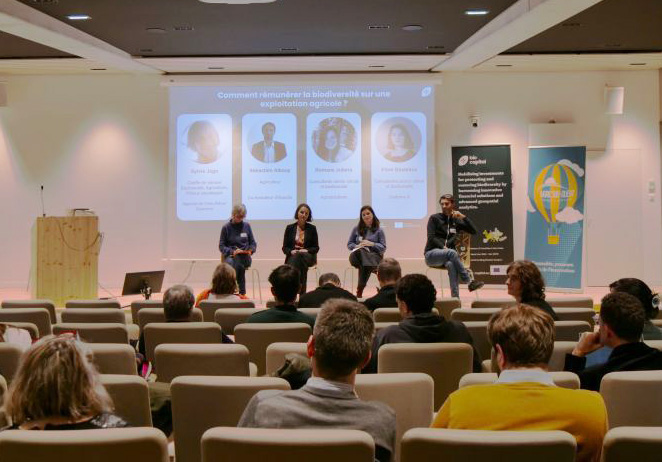
The late-morning roundtable addressed one of the most practical questions of the day: how to finance biodiversity on farms. Romane Jubera (Agrosolutions) and Sylvie Jego (Agence de l’Eau Adour-Garonne) presented concrete examples of Payments for Environmental Services (PES) already operating at scale. These schemes remunerate farmers for biodiversity-friendly practices that go beyond legal requirements, using clearly defined indicators and transparent payment thresholds.
At the same time, Flore Bastelica (Carbone 4) discussed the emerging role of biodiversity certificates as a way to channel private finance into biodiversity outcomes. Unlike regulatory offsets, these certificates are conceived as voluntary contributions aligned with territorial strategies, designed to complement — not replace — public funding.
Farm representatives and advisers underlined the importance of economic viability, low transaction costs and simple frameworks, as well as the need to strengthen value chains that can sustain biodiversity-friendly practices beyond subsidies.
A shared takeaway from the day
Across presentations and discussions, a shared conclusion emerged: biodiversity remuneration already exists, but scaling it requires clearer frameworks, trusted measurement and stronger coordination between public and private actors.
This is precisely the space BIO-CAPITAL is working in — testing indicators, monitoring approaches and financing mechanisms that can make biodiversity funding more transparent, credible and accessible for farmers and investors alike: Biodiversity is not the cherry on the cake: it must become the main weave of agriculture.
The full recording of the Technical Day is available here (English subtitles available):
👉 www.youtube.com