When Finance Becomes Conditional: Programmable Finance and the Future of Biodiversity Funding
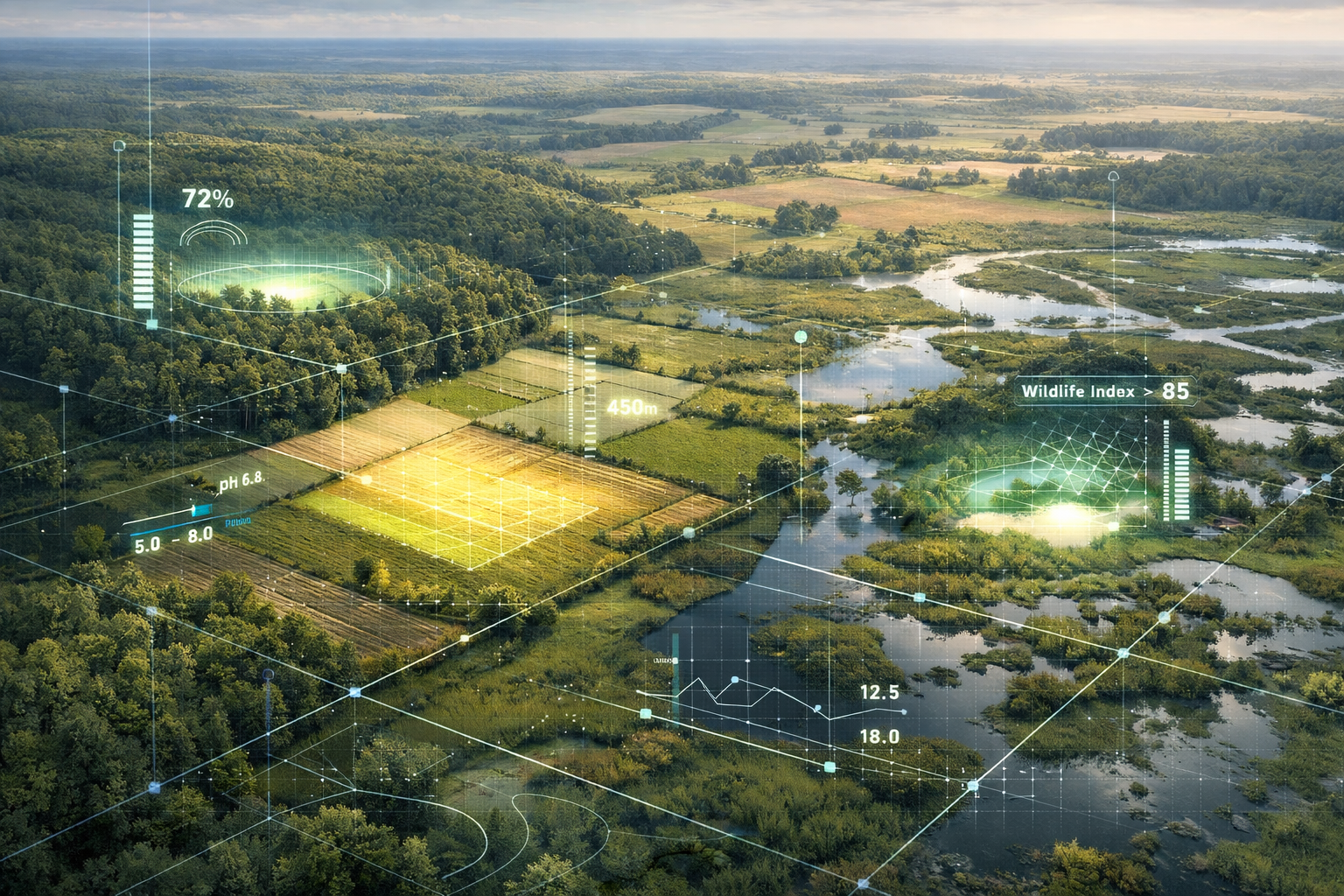
Image generated by ChatGPT 5.2
Biodiversity loss is accelerating — yet capital flows into nature remain slow, fragmented, and difficult to scale. While development banks, pension funds and institutional investors increasingly recognise ecological risk, the financial system itself is poorly equipped to deal with the complexity, locality and long time horizons of biodiversity. This tension formed the starting point of a recent BIO-CAPITAL Deep Dive, where Berat Efe Alkan (17s), Umut Gökcen Yilmaz (AIPA) and Tayfun Bashi (17s) explored how programmable finance could help close the gap between biodiversity needs and financial practice.
Why biodiversity doesn’t fit traditional finance
Unlike carbon, biodiversity cannot be reduced to a single metric. Impacts are highly context-specific, seasonal, and often slow to materialise. Verification is expensive, indicators are numerous, and standardisation remains difficult. From a financial perspective, this creates uncertainty around risk, performance and accountability.
As the speakers noted, the problem is not a lack of capital — but a lack of financial tools capable of handling complex, data-rich, multi-actor systems over long time horizons. Traditional financing models struggle to operate under these conditions.
What is programmable finance?
Programmable finance refers to financial flows that execute automatically once predefined and verified conditions are met. Unlike conventional digital banking — which mainly digitises existing processes — programmable finance embeds conditionality directly into financial logic. In practice, this means that:
- payments, interest rates or incentives change automatically
- decisions are triggered by verified data
- execution does not depend on manual reporting or discretionary approvals
The speakers illustrated this with a simple analogy: a smartwatch that adjusts insurance premiums automatically based on verified health data. Applied to biodiversity, the principle is the same — except the data comes from satellite observations, certification schemes, and environmental monitoring systems.
From data to financial action
A core requirement for programmable finance is trusted data infrastructure. The Deep Dive highlighted how geospatial data, telemetry systems, certification protocols and third-party verification can feed directly into smart financial contracts. Once agreed thresholds are reached — for example improvements in habitat quality, pollinator presence or regenerative practices — financial actions are triggered automatically. Conditionality becomes operational, not merely contractual.
Crucially, programmable finance is not limited to simple, peer-to-peer transactions. Its real potential emerges in complex supply chains, where multiple actors, data sources and environmental impacts interact. Here, machine learning and large-scale data processing allow financial logic to respond to indirect, cumulative and long-term effects.
Use cases: agriculture, supply chains and biodiversity credits
The session explored several illustrative scenarios. In agriculture, sustainability-linked loans could automatically adjust interest rates based on verified pollinator habitats or pesticide-free management. In supply chains, payments between producers, traders and brands could be triggered by verified reductions in water use or chemical inputs.
In biodiversity credit schemes, programmable finance could ensure that payments are released only when ecological outcomes are demonstrated — rather than upfront or based on projected impact. Across these contexts, the approach reduces risk for investors while increasing accountability for environmental performance.
Why this matters for BIO-CAPITAL
As with parametric insurance — another BIO-CAPITAL Deep Dive topic — programmable finance shifts the focus from compensation and promises to automatic, rule-based execution linked to real-world conditions. It offers a concrete mechanism to align financial systems with the realities of ecosystems: complex, data-rich and slow-moving.
Programmable finance will not replace all existing instruments. But as data quality, verification frameworks and digital infrastructure mature, it could become a critical building block for scaling outcome-based biodiversity finance — ensuring that money flows when, and only when, nature actually benefits.